Magnetic locks are everywhere in Miami — on glass storefronts in Brickell, office suites in Wynwood, condo amenity doors, gym entrances, and back-of-house corridors in hotels. They’re popular because they’re strong, simple, and work with almost any access control system.
They’re also one of the most frequently misinstalled pieces of security hardware we see. A maglock that isn’t wired and released correctly can trap people inside during an emergency, fail a fire inspection, and create serious liability. Here’s what property managers and business owners should know before hiring magnetic door lock installers in Miami.
How a Magnetic Lock Works
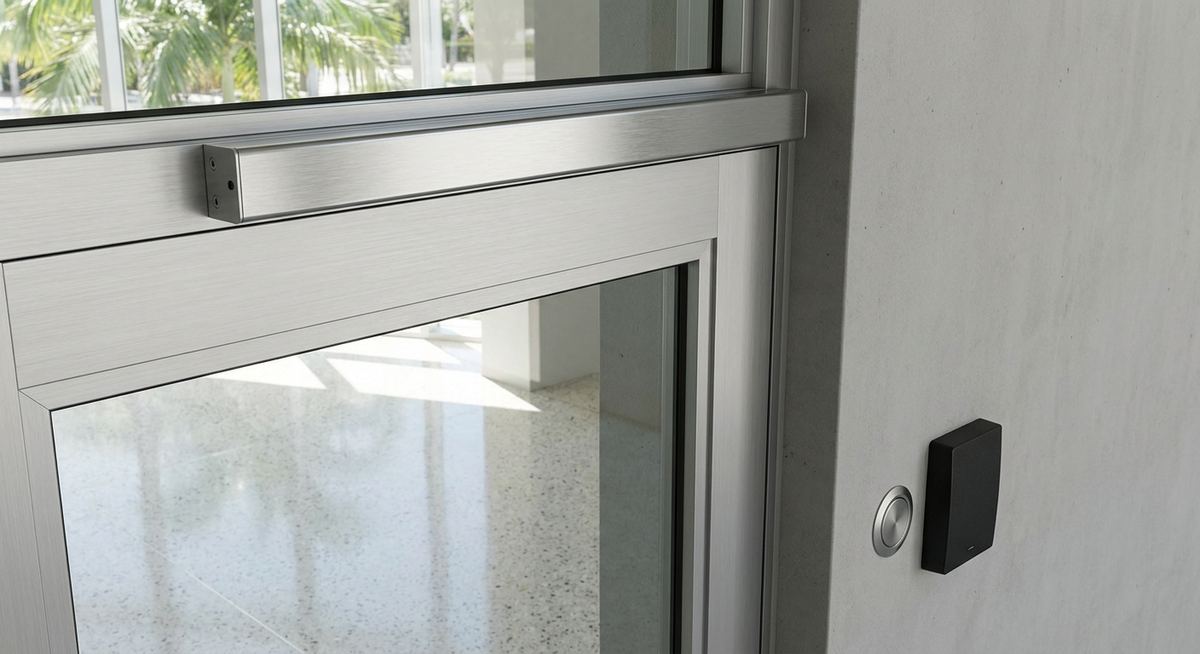
An electromagnetic lock (maglock) has two parts: an electromagnet mounted to the door frame and a steel armature plate mounted to the door. When powered, the magnet bonds to the plate and holds the door closed. Cut the power, and the door releases instantly.
That makes maglocks fail-safe by design — they unlock when power is lost. That’s excellent for life safety, but it also means your security plan has to account for power outages, which Miami sees plenty of during storm season.
Maglock vs. Electric Strike: Which Is Right?
Maglocks aren’t the only option for electronic access control. The other common choice is an electric strike, which replaces the strike plate in the frame and works with the door’s existing mechanical lock or exit device.
Maglocks are often a good fit for:
- Glass doors and all-glass storefronts where other hardware is hard to mount
- Doors that need very high holding force
- Retrofits where cutting into the frame isn’t practical
- Interior doors in controlled environments
Electric strikes are often a better fit for:
- Doors that must stay mechanically locked during a power loss (fail-secure)
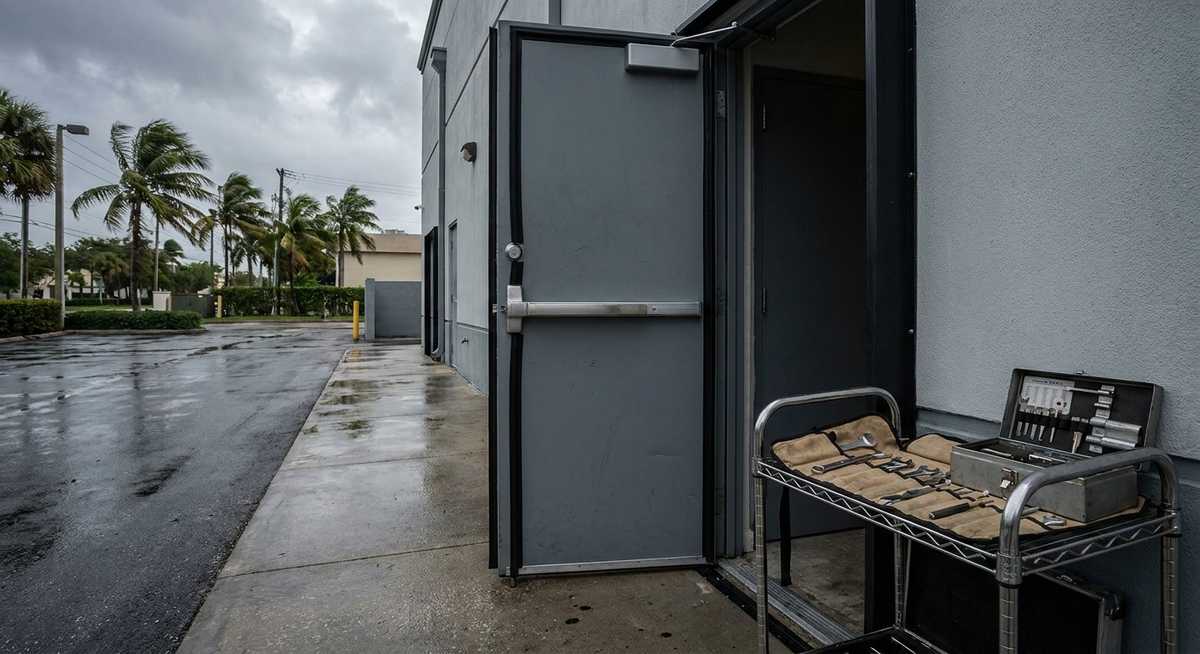
- Doors already equipped with panic bars or mortise locks
- Exterior perimeter doors where security during outages matters most
- Openings where code officials prefer a mechanical latching solution
Many buildings use both. A professional site survey will match hardware to each opening, not one product to every door.
The Code Side: Maglocks Must Let People Out
The most important rule with magnetic locks is simple: people must always be able to exit without a key, a code, or special knowledge. The NFPA 101 Life Safety Code, which Florida adopts through the Florida Fire Prevention Code, sets out specific requirements for electrically locked egress doors.
In general terms, a properly installed maglock on an egress door needs:
- An egress-side release — typically a motion sensor that detects someone approaching and releases the lock, or door-mounted hardware such as a panic bar with an integrated switch
- A manual backup release — often a “push to exit” button located near the door that directly cuts power to the lock
- Fire alarm integration — the lock must release automatically when the building fire alarm activates
- Release on power loss — the lock must unlock if power fails
- Listed hardware — components listed for access control use
Some occupancies also allow delayed egress locks, which hold the door for a short, code-defined delay while sounding an alarm. These have their own strict rules and signage requirements, and approval from the local fire authority is essential.
Requirements vary by occupancy type and jurisdiction, and codes are updated over time. Always verify the specifics with your local building and fire officials before installation.
Don’t Forget Accessibility
Access-controlled doors also need to work for everyone. Release buttons, card readers, and door hardware should be mounted at accessible heights and operable without tight grasping or twisting. The 2010 ADA Standards for Accessible Design are the reference for reach ranges, operable parts, and door opening force. If your entrance uses an automatic operator, it needs to be coordinated with the maglock so the door releases before the operator tries to open it.
Common Maglock Installation Mistakes We Fix
- Push-to-exit buttons that only signal the access panel instead of directly cutting power to the lock
- No fire alarm tie-in, or a tie-in that was disconnected during a renovation
- Undersized or unmonitored power supplies that fail silently
- Misaligned armature plates that reduce holding force and let doors “rattle open”
- Maglocks installed on doors that already have panic hardware without integrating the two
- Exposed wiring on the secure side that can be tampered with
If any of these sound familiar, it’s worth an inspection before your next fire marshal visit.
Integrating Maglocks Into a Full Access Control System
A maglock is just the locking device. The real value comes from the system behind it: card readers, mobile credentials, keypads, schedules, audit trails, and remote management. We covered the full picture in our 2026 guide to commercial access control for property managers, condo boards, and hotel operators.
The door itself matters too. Magnetic locks perform best on solid, well-hung doors and frames. If your doors are warped, sagging, or damaged, our commercial door services can correct the opening first so the lock can do its job. For larger buildings and multi-door rollouts, our commercial projects team handles design, installation, and coordination with other trades.
When Something Goes Wrong After Hours
A maglock that won’t release, a door that won’t lock at closing time, or a failed power supply is an urgent problem for any business. Our 24/7 emergency locksmith service responds day or night across greater Miami.
Hire Experienced Magnetic Door Lock Installers in Miami
Miami Doors & Locks is a commercial-focused locksmith and security hardware company serving condos, hotels, retailers, banks, and offices across Miami. We’re an authorized Mul-T-Lock and Medeco dealer, and we design, install, and service access control systems built to be secure and code-compliant.
Request a maglock or access control quote
Miami Doors & Locks — 1601 NW 54th St, Miami, FL 33142 — (305) 576-9320 — https://www.miamidoorsandlocks.com