Every condo board in Miami-Dade eventually has the same meeting. The parking gate is broken again. Residents are propping it open. A former tenant still has a working clicker. The vendor who installed it twelve years ago is out of business, and nobody can find the manual.
Vehicle access control is the most-used piece of security hardware on a property — it cycles hundreds of times a day — and it is usually the least planned. Here is how to think about it properly.
Why the Vehicle Gate Matters More Than the Front Door
The pedestrian entry gets attention because people walk through it. But the garage is where the exposure sits: vehicle burglaries, catalytic converter theft, package theft, and unauthorized access by people tailgating in behind a resident.
A gate that is slow, unreliable, or confusing gets propped open — and a propped gate is worse than no gate, because it creates the appearance of security without the function. The goal is not “install a gate.” It is a system reliable enough that nobody has a reason to defeat it.
The Four Components
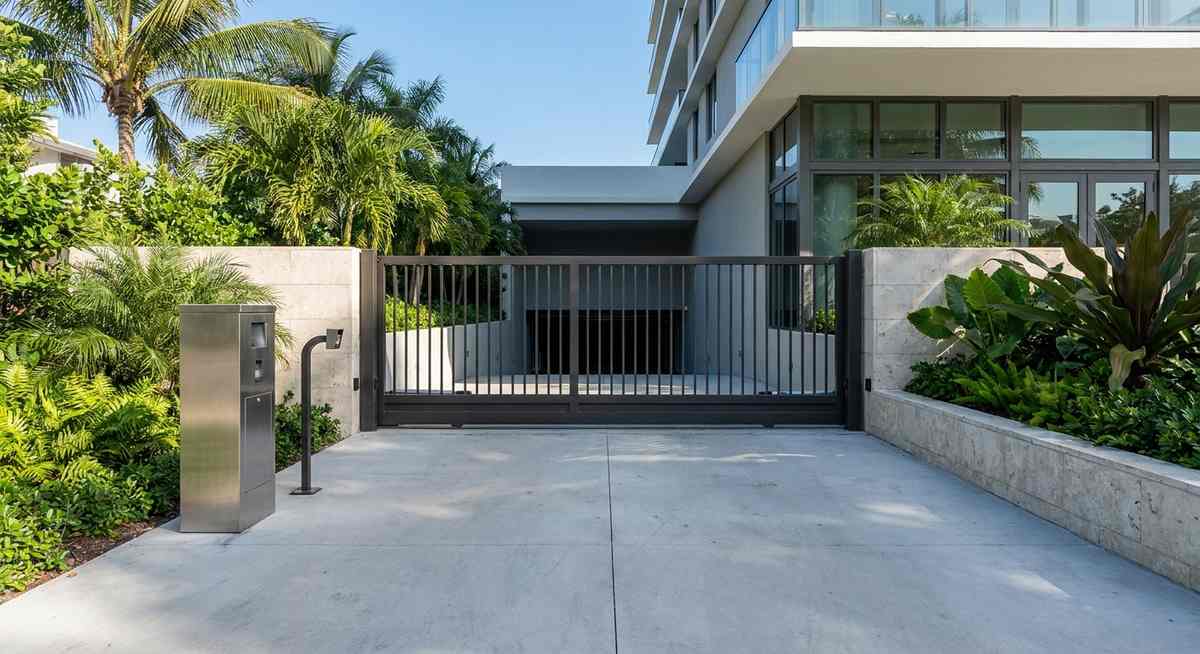
1. The barrier. Slide gates need side room and a clean track. Swing gates need arc clearance and struggle in wind. Barrier arms cycle fastest and are cheapest to repair but stop nothing but cars. Overhead doors give full enclosure and cost the most to maintain.
2. The operator. The motor and controller — where reliability lives or dies. Duty cycle rating matters enormously; an operator rated for light residential use installed on a 300-unit building will fail repeatedly, and every failure is an emergency call.
3. The credential and reader. Clickers, keypads, proximity cards, long-range RFID tags, license plate recognition, or smartphone-based credentials.
4. Safety devices. Photo eyes, edge sensors, and inherent obstruction sensing. Not optional — this is a code and liability matter, covered below.
Long-Range Readers: The Upgrade Most Properties Should Make
The biggest practical improvement available to a Miami condo garage is moving from a stop-and-present credential to a long-range reader.
With a short-range card reader or keypad, every resident must stop, lower the window, reach out, and present a credential. In a rainstorm — which in Miami is most summer afternoons — that is genuinely unpleasant, and it creates a queue at the gate during the evening rush that backs traffic into the street.
A long-range RFID system reads a windshield tag or a hang tag from ten to thirty feet away. The resident approaches, the gate is already opening, and they drive through without stopping. Throughput improves dramatically, resident satisfaction improves more, and — critically — tailgating drops because the gap between vehicles narrows less.
We install long-range validation readers as part of our commercial projects work, and we typically pair them with a managed credential database so the property can deactivate a tag the day a resident moves out. That last point solves the single most common condo security gap: the credential that is never returned.
Safety and Code: The Part Nobody Wants to Read
Automatic vehicle gates are powered machinery capable of serious injury. They are regulated accordingly.
The governing safety standard for vehicle gate operators in the United States is UL 325, which classifies operators by usage type and mandates layered entrapment protection — typically a primary inherent sensing system plus at least one independent external device such as photo eyes or a sensing edge. Gates must also be constructed and installed to prevent reaching through, climbing, or being caught by the moving leaf. The U.S. Consumer Product Safety Commission has documented gate-related injuries and deaths, and the standards exist because of them.
What this means for a board:
- An operator installed before the current standard is not automatically compliant. Older installations frequently lack required entrapment protection.
- Disabling a photo eye because it “keeps false-triggering” creates liability. The correct fix is realignment or replacement, not bypass.
- Safety devices need periodic testing, and testing needs to be documented. Documentation is what protects the association if something happens.
Beyond safety, Florida associations operate under the statutory framework in Chapter 718 of the Florida Statutes, which governs condominium association responsibilities including maintenance of common elements — the garage gate very much included. Deferred maintenance on a life-safety device is a poor position for a board to be in.
Emergency Access and Egress
Two scenarios boards routinely under-plan:
Fire department access. Local requirements typically mandate a method for emergency responders to open the gate — a Knox-style key switch, a strobe-activated receiver, or a siren-activated sensor. This should be verified with the local jurisdiction, not assumed.
Power failure. Miami loses power. During hurricane season, it loses power for a while. Every gate needs a defined failure mode: battery backup that keeps the gate cycling, a manual release that lets residents get out, or fail-open logic. A garage full of cars that cannot exit after a storm is a real problem, and it is entirely preventable at the specification stage. Our emergency service team responds around the clock, but the better outcome is a system designed so the call is not necessary.
Integrating the Gate With the Rest of the Property
A vehicle gate is rarely worth managing in isolation. Most of the properties we work with want one credential and one administrative interface covering the garage, the lobby, the elevator, the amenity deck, and the service entrances. Adding or removing a resident should be one action, not six.
That is the logic behind integrating gate control into a broader access platform — the same thinking we laid out in our 2026 guide to commercial access control for property managers, condo boards, and hotel operators. The gate is one door among many; it should be administered like one.
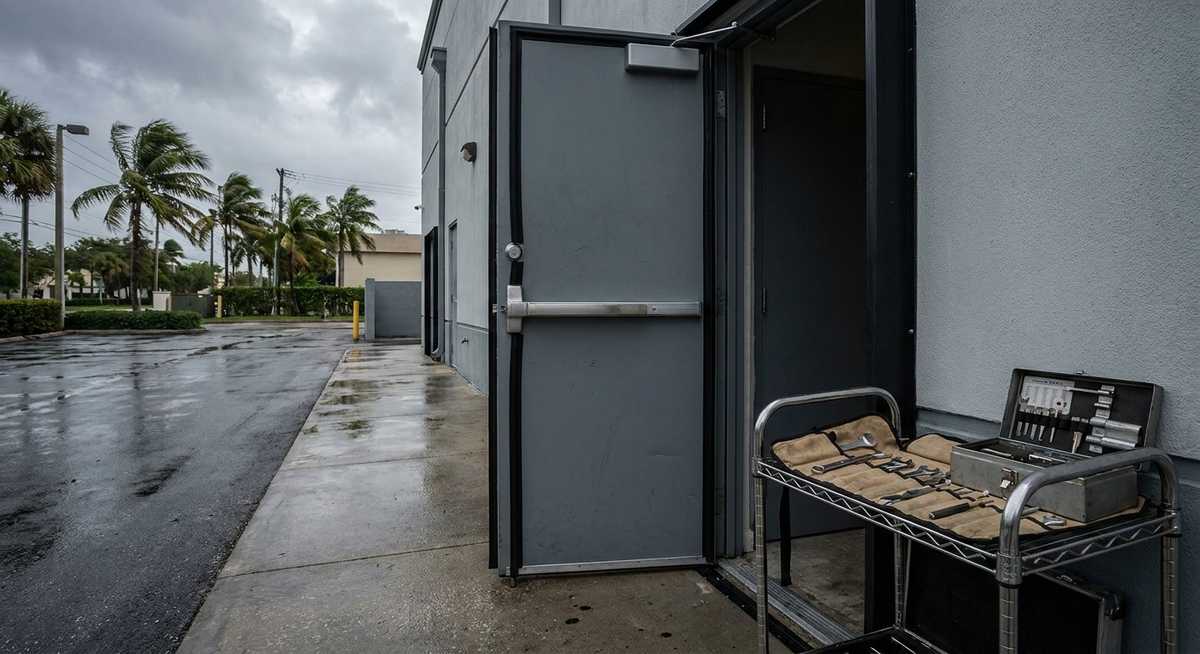
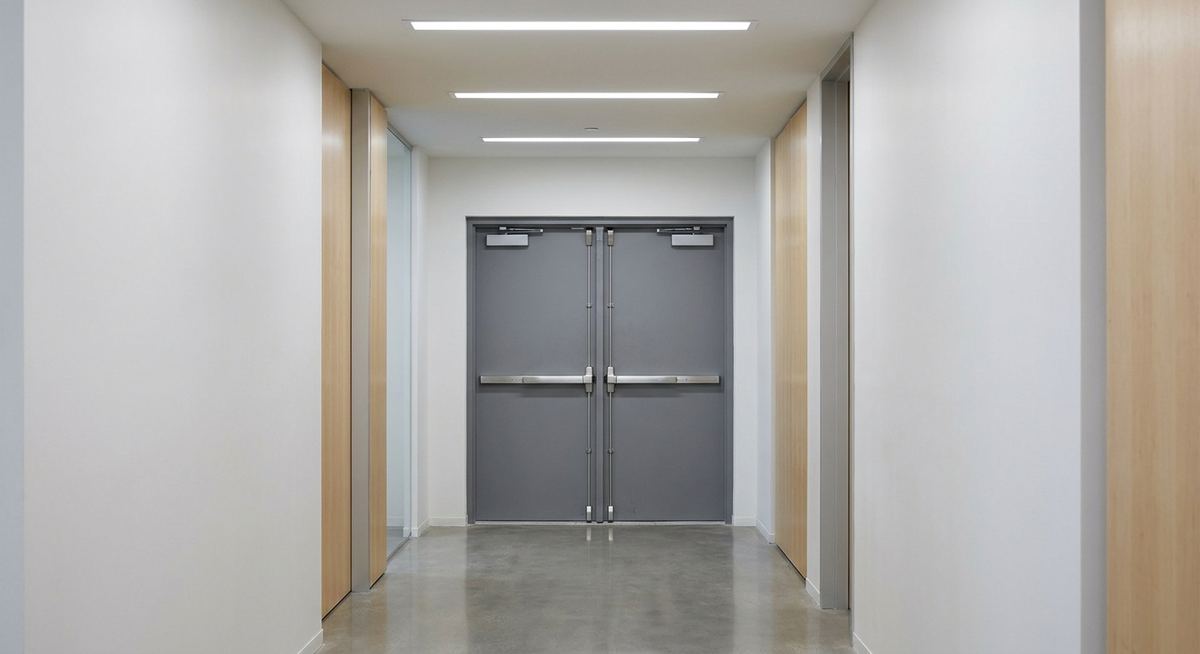
Properties also frequently pair a gate upgrade with hardening the pedestrian openings around the garage — the stair doors and man-doors that are the actual walk-in path once someone is inside the structure. Those need proper commercial doors and high-security cylinders, or the gate is securing a room with an open side.
What to Ask a Vendor
Before you sign:
- What is the operator’s UL 325 usage class, and does it match our traffic volume?
- What entrapment protection devices are included, and how are they tested?
- What is the power-failure behavior, and is battery backup included?
- How is emergency responder access provided?
- Who administers credentials, and how fast can one be revoked?
- What is the response time for a gate-down emergency?
Talk to a Miami Commercial Locksmith
We have been securing Miami’s condos, hotels, retailers, banks, and commercial properties for years — including vehicle gate systems with long-range reader validation, access control, elevator control, and hotel RFID platforms. We are an authorized Mul-T-Lock and Medeco dealer, and we respond 24/7.
Request a quote for your property’s vehicle access control
Miami Doors & Locks — 1601 NW 54th St, Miami, FL 33142 — (305) 576-9320 — https://www.miamidoorsandlocks.com