High season is here. Snowbirds are back, hotel occupancy is climbing, holiday deliveries are piling up in lobbies, and Art Week brings a wave of visitors to Miami. For property managers, that means more people moving through buildings, and more pressure on the one system nearly everyone uses: the elevator. If your front door is locked but your elevators will take anyone to any floor, your security has a gap. Elevator access control in Miami closes it.
What Is Elevator Access Control?
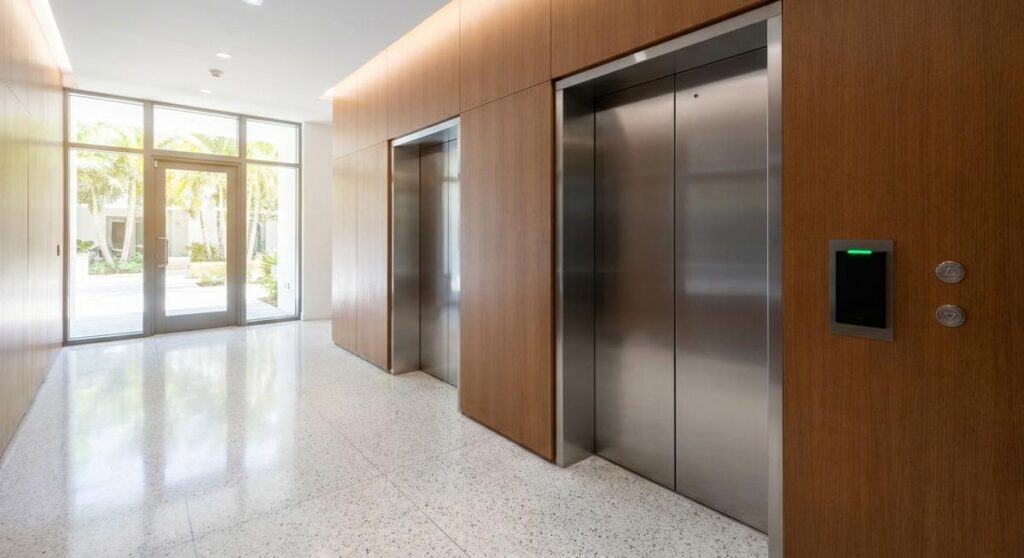
Elevator access control links your elevators to a credential system so riders can only reach the floors they’re authorized for. Instead of every button working for everyone, a resident, guest or employee presents a key card, fob or mobile credential at a reader inside the cab or in the lobby. The system then enables only the approved floors.
Common setups include:
- Card readers in the cab that unlock specific floor buttons after a valid credential is presented
- Lobby-level readers that grant access to the elevator bank itself
- Time-based schedules that leave common floors open during the day and restrict them after hours
- Integration with hotel RFID systems so a guest key card only reaches the guest’s floor and amenity levels
Why Miami Properties Are Adding It Now
Condos and Residential Towers
In a condo, elevator control protects residents from unauthorized visitors, reduces package theft from hallways and limits access to amenity floors like gyms, pools and rooftops. During snowbird season, when many units are occupied by guests, renters or family members, credential-based access makes it easy to grant and remove permissions without re-keying anything.
Hotels
Hotel guests expect privacy. Linking elevator access to room key cards keeps non-guests off guest floors, while still allowing access to the lobby, restaurants and event levels. Miami Doors & Locks has installed hotel RFID lock systems for Miami hospitality properties, and elevator control is a natural extension of that system.
Office and Mixed-Use Buildings
Multi-tenant buildings often need to separate tenants by floor, protect server rooms and executive suites, and give cleaning crews or vendors limited access after hours. Elevator control makes those rules automatic.
Reducing Tailgating and Unauthorized Access
Tailgating, where someone follows an authorized person through a door or into an elevator, is one of the most common building security problems. Federal security guidance, such as the Interagency Security Committee’s best practices for facility access control published through CISA, emphasizes layered access: controlling entry at the perimeter, then again at more sensitive interior areas.
Elevator control is that second layer. Even if someone slips through the lobby door, they can’t reach residential, guest or tenant floors without a valid credential.
Safety and Accessibility Come First
A well-designed elevator access system must never compromise life safety or accessibility. Key considerations include:
- Fire service operation. Elevator access control should be coordinated so that fire recall and firefighter operation work as required during an emergency.
- Accessible controls. Readers and buttons should be placed and operated in a way that supports accessibility. The 2010 ADA Standards for Accessible Design include requirements for elevator controls, call buttons and signage.
- Free egress. Access control should restrict who can go up, not trap anyone from getting out.
Because elevators involve multiple trades, the work should be coordinated with your elevator maintenance contractor, fire alarm vendor and property management team.
What a Good System Includes
When we design elevator access control, we look at the full picture:
- Credentials: cards, fobs or mobile credentials that match your existing doors, gates and amenities.
- Management software: an easy way to add, change or remove access instantly, including temporary access for guests and vendors.
- Audit trails: logs that show which credential was used, where and when.
- Integration: one system that ties together doors, parking gates, intercoms and elevators. Our commercial access control systems guide explains how these pieces fit together.
- Service and support: fast help when a reader, controller or credential needs attention.
Signs Your Building Needs Elevator Access Control
- Residents report strangers on residential floors.
- Packages are disappearing from hallways or doorsteps.
- Amenity spaces are being used by non-residents.
- You’re still managing access with physical keys for elevator lockouts.
- Your hotel guests can reach any floor without a key card.
Why Work With Miami Doors & Locks
Miami Doors & Locks is a commercial-focused locksmith and security partner serving condo associations, hotels, retailers and office buildings across greater Miami. We’re an authorized Mul-T-Lock and Medeco dealer, and our commercial projects range from single entrances to full-building security upgrades. We also offer 24/7 emergency locksmith service when you need help fast.
Secure Every Floor This Season
High season is the right time to make sure your elevators are part of your security plan, not a gap in it. Talk to our team about elevator access control for your Miami property.
Request an elevator access control consultation
Miami Doors & Locks — 1601 NW 54th St, Miami, FL 33142 — (305) 576-9320 — https://www.miamidoorsandlocks.com